Blueprint 2.0 • Evidence & Practice Framework

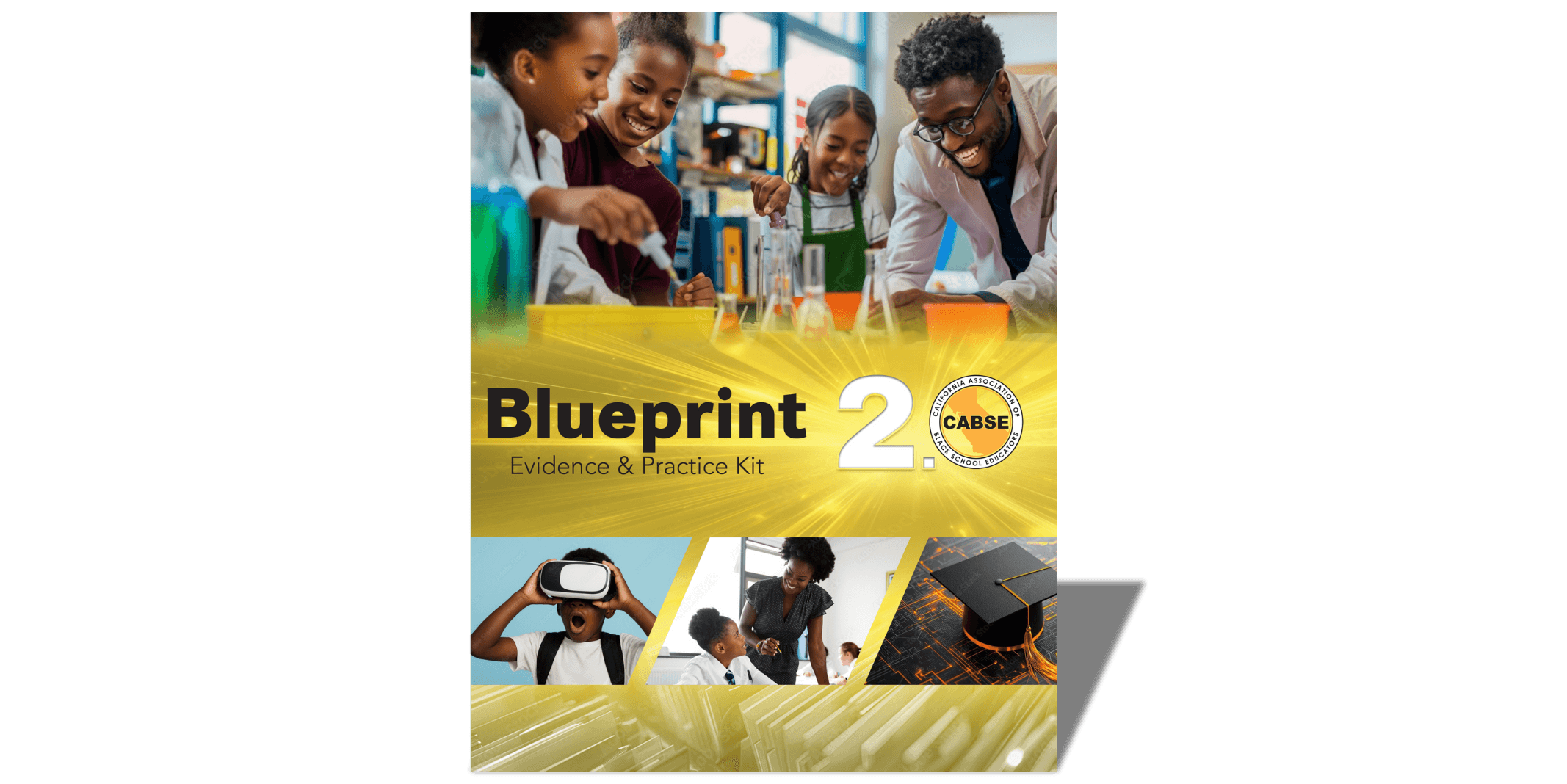
Blueprint 2.0
Built for Black Student Success

A living, evidence-based toolkit that connects research, practice, and leadership to advance Black student success.

Who It’s For
Designed for education leaders and partners working to advance equity and Black student success.
How it’s organized

Evidence → Practice → Impact

How Blueprint 2.0 moves from research to real-world change.

The five themes

Explore Blueprint 2.0 Themes

Five research-grounded priorities designed to eliminate disparities and advance Black student success.
THEME 1
Culture of High Expectations
Student-Responsive Classrooms

High Quality Instruction & Instructional Tools that Excite and Challenge Students

High-quality instruction affirms Black students’ brilliance and ensures access to rigorous, engaging learning experiences that challenge and inspire.

THEME 2
Continuous Improvement
Disaggregation

Data-Driven, Targeted & Responsive Practices

By disaggregating and using data meaningfully, educators can identify barriers and opportunities that shape outcomes for Black students.

THEME 3
Buy-In: Dais to Desk
High Expectations

Cultivating High Quality Teachers

Investing in developing and supporting high-quality, equity-driven teachers—especially Black teachers—translates directly into improved outcomes for Black students.

THEME 4
High Support
Acceleration

Targeted Tutoring & Extended Learning Time

Targeted tutoring and extended learning opportunities offer intensive, personalized support to close opportunity gaps.

THEME 5
Community Voice
Address SDoE

Family–Community–Partner Connection

When families, schools, and communities unite, Black students gain affirmation, opportunity, and justice.

EQUITY LENS

help / harm contexts

An equity lens for understanding when systems support Black students, and when they cause harm.
Select a context to see how Blueprint themes, tools, and district actions connect.

what this means

Definition

High expectations paired with meaningful support communicate belief in Black students’ brilliance and potential. Harm occurs when rigor is uneven, expectations are lowered, or support is conditional.

Connected themes

Highlights

  • Theme 1: High Quality Instruction & Instructional Tools that Excite and Challenge Students
  • Theme 3: Cultivating High Quality Teachers
  • Theme 2: Data-Driven, Targeted & Responsive Practices
example resources

From the Toolkit

  • High Expectations Instructional Look-Fors
  • Equity Walkthrough Protocol
  • Data-Driven, Targeted & Responsive Practices
  • Instructional Coherence Toolkit
View All In Toolkit
district action

What this Unlocks

  • Common language
  • Aligned expectations
  • Instructional rigor
  • Targeted support
  • Shared accountability
what this means

Definition

Instruction adapts to students’ identities, experiences, and learning needs. Harm occurs when classrooms are rigid, culturally disconnected, or dismissive of student voice.

Connected themes

Highlights

  • Theme 1: High Quality Instruction & Instructional Tools that Excite and Challenge Students
  • Theme 2: Data-Driven, Targeted & Responsive Practices
  • Theme 4: Targeted Tutoring & Extended Learning Time
example resources

From the Toolkit

  • Student-Responsive Classroom Practices
  • Culturally Affirming Instruction Framework
  • Targeted Support Planning Tool
  • Classroom Data Reflection Protocol
View All In Toolkit
district action

What this Unlocks

  • High Expectations Instructional Look-Fors
  • Student voice
  • Flexible supports
  • Real-time adjustment
  • Classroom coherence
what this means

Definition

Alignment across leadership, educators, and staff ensures equity commitments translate into daily practice. Harm occurs when initiatives lack coherence, ownership, or follow-through.

Connected themes

Highlights

  • Theme 3: Cultivating High Quality Teachers
  • Theme 2: Data-Driven, Targeted & Responsive Practices
  • Theme 5: Family–Community–Partner Connection
example resources

From the Toolkit

  • Leadership for Equity Alignment Guide
  • Systems Coherence Reflection Tool
  • Equity Implementation Planning Template
  • Stakeholder Engagement Framework
View All In Toolkit
district action

What this Unlocks

  • Systemwide alignment
  • Clear ownership
  • Consistent implementation
  • Leadership coherence
  • Sustained momentum
what this means

Definition

Systems recognize and respond to out-of-school factors that shape learning opportunities. Harm occurs when these realities are ignored, minimized, or treated as excuses rather than responsibilities.

Connected themes

Highlights

  • Theme 5: Family–Community–Partner Connection
  • Theme 4: Targeted Tutoring & Extended Learning Time
  • Theme 2: Data-Driven, Targeted & Responsive Practices
example resources

From the Toolkit

  • Community Partnership Mapping Tool
  • Student Support Systems Inventory
  • Integrated Student Supports Framework
  • Opportunity Gap Analysis Protocol
View All In Toolkit
district action

What this Unlocks

  • Cross-sector partnerships
  • Coordinated supports
  • Resource alignment
  • Barrier reduction
  • Whole-child systems
what this means

Definition

Equity requires differentiated approaches based on need, not uniformity for convenience. Harm occurs when sameness is mistaken for fairness.

Connected themes

Highlights

  • Theme 2: Data-Driven, Targeted & Responsive Practices
  • Theme 4: Targeted Tutoring & Extended Learning Time
  • Theme 1: High Quality Instruction & Instructional Tools that Excite and Challenge Students
example resources

From the Toolkit

  • Differentiated Support Planning Tool
  • Equity-Driven Decision-Making Protocol
  • Data Disaggregation Guide
  • Continuous Improvement Cycle Template
View All In Toolkit
district action

What this Unlocks

  • Differentiation
  • Equity-driven decisions
  • Targeted investment
  • Adaptive systems
  • Continuous improvement
FEATURED FRAMEWORK

HQIM Math Blueprint

The HQIM Math Blueprint positions mathematics as a gateway to opportunity, not a gatekeeper, by centering rigorous, engaging instruction paired with meaningful support for Black students.

The HQIM Math Blueprint is a featured framework within the Blueprint 2.0 Evidence & Practice Toolkit that demonstrates how equity-centered principles are applied in mathematics.

IMPLEMENTATION

From Evidence to Action

How to use the Blueprint to make an impact.

1. Ground Your Team

Start each leadership meeting or PD session by exploring one Blueprint Theme (e.g., High-Quality Instruction or Targeted Tutoring).

→ Ask: Where do we already see this in practice? Where are the gaps?

This builds common language and shared purpose.

2. Identify a “Help/Harm” Focus

Use the Help/Harm Contexts to diagnose current conditions:
Help: What’s creating a culture of high expectations or responsiveness?
Harm: What policies or practices might unintentionally hold students back?

Then prioritize one or two contexts to address system-wide.

3. Connect Evidence to Action

Select a few evidence-based resources from each theme (the Toolkit clearly lists Reports, Presentations, and Tools).

→ Use them to inform your instructional rounds, leadership retreats, or improvement cycles.

Frame each as: What can we adapt? What will we measure?

4. Integrate Into Continuous Improvement

Fold the Toolkit into your data cycles and equity plans:

Use “Data-Driven, Targeted & Responsive Practices” resources to analyze disaggregated student data.

Link findings to specific Blueprint strategies and track implementation progress quarterly.

5. Use in Professional Learning Communities

Assign Toolkit sections as “anchor readings” for PLCs or equity teams.

→ Example: A math PLC might use the HQIM Math Blueprint alongside Active Learning in STEM or Math ThatTransforms Futures sessions.

6. Share Across Levels — From Dais to Desk

Encourage every layer—school board, superintendent, principal, teacher—to see themselves in the work.

Pair leadership discussions with classroom-level exemplars so equity becomes both policy and practice.

7.  Revisit and Refresh

Because the Blueprint is a living collection, revisit it each semester.

Add your own promising practices, or align with CABSE’s ongoing Institute learnings and updates at www.cabse.org.


BACK TO TOP

Explore the Blueprint 2.0 Evidence & Practice Toolkit

A curated set of evidence, tools, and practice guidance designed to support equity-centered action in districts, schools, and classrooms.